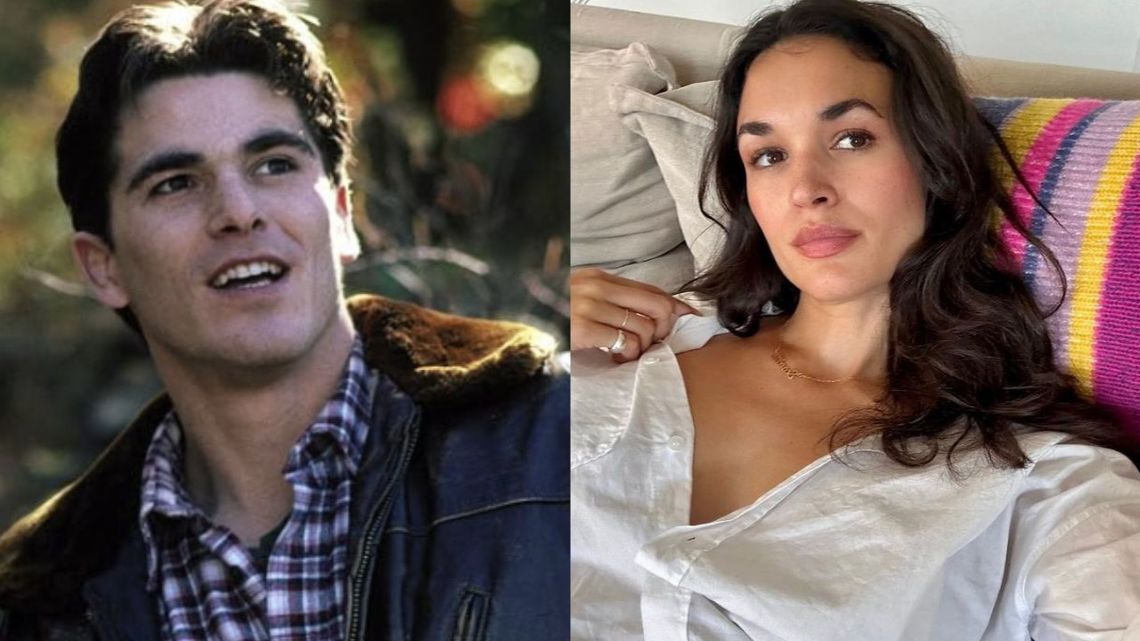
Valerie C. Robinson occupies an unusual place in entertainment history: familiar to many readers, yet remarkably difficult to know beyond the fragments preserved in public records. Her name is closely associated with former actor Michael Schoeffling, but her own story includes modeling and screen appearances that existed before and alongside that relationship. Although she never became a conventional Hollywood celebrity, her career offers an interesting glimpse into an era when performers could move between modeling, television, film, and private family life without remaining permanently visible.
Valerie C. Robinson and the Appeal of a Private Hollywood Story
Valerie C. Robinson represents a side of celebrity culture that is increasingly rare. Rather than turning personal history into a continuous public performance, she became less visible as the years passed. Consequently, much of the interest surrounding her today comes from people trying to reconstruct a story that was never extensively documented in mainstream entertainment media.
That mystery has made her name particularly searchable. However, the absence of information should not automatically be interpreted as evidence of a dramatic hidden life. Instead, it can simply reflect a deliberate retreat from publicity. In an entertainment culture built around constant exposure, that decision itself becomes part of the story.
From Modeling Into the Entertainment World
The public record generally describes Robinson as a former model and actress. Her connection to modeling is especially significant because the fashion industry of the late twentieth century often served as a bridge into commercial acting and television work. For performers without major studio contracts, smaller opportunities could gradually create a portfolio across several forms of entertainment.
Moreover, modeling offered a very different route into Hollywood from the traditional theater-to-film pathway. Appearance, camera confidence, networking, and professional contacts could all open doors. Robinson’s association with the same modeling world as Michael Schoeffling therefore provides useful context for understanding how their paths crossed during the early 1980s.
Valerie C. Robinson on Screen: A Modest but Interesting Filmography
Robinson’s acting career was not extensive, yet the projects connected with her name help establish that she was more than simply a celebrity spouse. Publicly available film databases and biographical sources associate her with productions including Having Babies II, One Shoe Makes It Murder, Over the Brooklyn Bridge, and Patty Hearst. Some records also connect the acting credits with the name Valerie Carpenter Bernstein, adding another layer of complexity to her biography.
These appearances are best understood within the context of supporting and smaller screen roles. Not every actor working in Hollywood becomes a household name, and many careers consist of a handful of credits before professional priorities change. Robinson’s filmography illustrates precisely that quieter path through the entertainment business.
Valerie C. Robinson and Michael Schoeffling
The strongest reason the public continues to encounter Robinson’s name is her long-standing relationship with Michael Schoeffling. Schoeffling became internationally recognizable after portraying Jake Ryan in Sixteen Candles, the 1984 John Hughes film that helped define the visual language of American teen cinema during the decade.
According to published entertainment accounts, the couple met through New York’s modeling scene and later married in 1987. Their relationship subsequently became connected with a family life that largely existed outside Hollywood’s daily spotlight. People has also reported that the couple have two children, Zane and Scarlett.
A Celebrity Family Without the Usual Publicity Machine
The Schoeffling family’s story is notable because it developed differently from the typical Hollywood family narrative. Once Michael’s acting career ended, the family’s public visibility declined considerably. Rather than continuously appearing at premieres, interviews, celebrity events, or entertainment conventions, the family largely remained outside the mainstream publicity cycle.
That privacy creates an interesting cultural contrast. Hollywood often rewards people for remaining visible, while the Schoeffling family became intriguing partly because of its distance from the spotlight. As a result, readers today often discover Robinson through searches about Michael rather than through extensive interviews or personal statements from her.
Who Is Connected to Her Public Story?
Because Robinson is frequently discussed in relation to her family, it helps to separate documented connections from assumptions. The following table provides a concise overview of the people and roles most relevant to her public biography.
| Person | Connection to the Story | Why the Connection Matters |
|---|---|---|
| Michael Schoeffling | Husband | Former actor and model best known for Jake Ryan in Sixteen Candles; later moved away from acting and worked in furniture making. |
| Zane Schoeffling | Son | One of the couple’s two children and part of the family life that followed their Hollywood years. |
| Scarlett Schoeffling | Daughter | Has pursued modeling and acting, giving the family a later connection to the entertainment world. |
| Valerie Carpenter Bernstein | Associated professional name | Some entertainment databases connect this name with Robinson’s acting record, helping explain variations found in searches. |
Valerie C. Robinson and the Meaning of Leaving Fame Behind
Leaving entertainment can look surprising when viewed from the outside, particularly for performers who experienced attention during a culturally memorable period. Yet stepping away from acting does not necessarily represent failure. For some people, it is simply a change in priorities, especially when career demands compete with family, personal independence, or a desire for ordinary life.
In Robinson’s case, the limited public record suggests a transition away from regular entertainment visibility. Meanwhile, her husband also left acting and eventually concentrated on furniture making. That parallel makes their story less about abandoning success and more about redefining what success meant after Hollywood.
The 1980s Context Behind Her Career
To understand Robinson’s professional journey, it is useful to remember how different the entertainment landscape was in the 1970s and 1980s. Television movies, smaller theatrical productions, modeling assignments, and supporting roles created numerous opportunities that did not necessarily translate into lasting celebrity status.
Furthermore, careers could disappear from public view surprisingly quickly. Before social media, an actor could complete several projects and then move into another profession without maintaining a constant digital footprint. Today, however, search engines preserve fragments of those careers indefinitely. That is one reason names such as Robinson’s can suddenly attract renewed attention decades after their original screen appearances.
Why Her Film Credits Still Matter
Although her acting credits are relatively limited, they remain valuable for understanding the professional world she entered. A small role can reveal something about the kinds of opportunities available to performers during a particular period, especially when examined alongside modeling and television work.
The importance of Robinson’s career therefore does not depend on the size of her roles. Instead, her filmography represents the thousands of working performers whose careers existed between the extremes of complete anonymity and international fame. Her story reminds audiences that entertainment history is built not only around leading stars but also around the people whose contributions appear in smaller credits.
The Problem With Online Celebrity Biographies
Modern searches for Robinson demonstrate both the usefulness and weakness of internet biography culture. Numerous websites repeat information about her age, birthplace, education, finances, career history, and family circumstances. Yet these claims do not always agree, and many provide no primary evidence.
For that reason, responsible coverage requires separating established information from frequently repeated speculation. For example, some sources publish precise birth dates or net-worth estimates, while others acknowledge that such details are uncertain. Treating an estimate as fact can gradually transform an online rumor into an apparently authoritative biography. Readers should therefore approach unsupported personal statistics with caution.
A Life Defined More by Choice Than Visibility
There is something quietly compelling about a person who participated in the entertainment industry without allowing that industry to define an entire lifetime. Robinson’s public story moves from modeling and acting toward marriage, family, and a much lower public profile.
That trajectory challenges the assumption that every performer wants a longer career or greater fame. Sometimes the more meaningful decision is knowing when a particular chapter has served its purpose. Consequently, Robinson’s story can be read as a reflection on personal agency: the ability to participate in a highly public world while ultimately choosing a more private existence.
What Her Story Says About Celebrity Culture Today
The continued interest in Robinson also reveals how modern audiences consume celebrity history. People are increasingly curious about what happened after the famous years ended. They want to know where former performers went, what their families became, and whether a life away from Hollywood can provide something that fame cannot.
In that sense, her story feels surprisingly contemporary. Social media has made visibility almost continuous, yet Robinson’s public life illustrates the opposite possibility. A person can have a recognizable connection to entertainment history and still remain largely absent from the modern celebrity ecosystem.
Valerie C. Robinson’s Enduring Public Image
Valerie C. Robinson is ultimately remembered through several overlapping identities: former model, actress, wife, mother, and private individual. None of these descriptions alone explains the continued curiosity surrounding her. Together, however, they create a portrait of someone whose life touched Hollywood without becoming permanently consumed by it.
Her connection with Michael Schoeffling naturally remains central to public interest, particularly because his decision to leave acting after a memorable run created its own enduring mystery. Yet focusing exclusively on that relationship risks overlooking Robinson’s independent place within the entertainment history of her generation. Her own screen work deserves recognition, even if it was never accompanied by widespread fame.
Frequently Asked Questions About Valerie C. Robinson
What was Valerie C. Robinson known for?
She is primarily known as a former model and actress whose public profile later became closely connected with Michael Schoeffling. Her acting credits include productions such as Having Babies II, One Shoe Makes It Murder, Over the Brooklyn Bridge, and Patty Hearst. Because some records use different professional names, her filmography can appear inconsistent across online sources.
Is Valerie C. Robinson married to Michael Schoeffling?
Published entertainment reporting identifies Robinson as Michael Schoeffling’s wife. Accounts report that the pair met through New York’s modeling scene and married in 1987. Their relationship became part of a broader family story that continued after Schoeffling’s acting career ended. Because both have maintained considerable privacy, relatively little firsthand information about their private relationship is publicly available.
How many children do they have?
Public biographies and entertainment reporting identify two children, Zane and Scarlett Schoeffling. Scarlett has developed her own connection to modeling and acting, while considerably less public information is available about Zane. Their children’s lives demonstrate how the family’s relationship with entertainment continued in a different generation, even after Michael and Robinson became less visible themselves.
What is known about her current life?
Reliable recent information about Robinson’s everyday life is limited. That limitation appears consistent with the family’s long-standing preference for privacy. Various websites make claims about residence, lifestyle, finances, and other personal details, but those statements are not uniformly supported. Therefore, it is more responsible to describe her current public profile as private rather than invent details about a life she has chosen not to document publicly.
Conclusion: The Quiet Legacy of a Life Beyond the Spotlight
The story of Valerie C. Robinson is compelling precisely because it resists the usual celebrity formula. She entered the worlds of modeling and acting, appeared in several screen productions, and became connected with one of the most recognizable teen-film actors of the 1980s. Yet, rather than turning that association into decades of publicity, she appears to have embraced a quieter chapter centered on family and private life.
Ultimately, her story offers a broader lesson about fame. Hollywood may preserve an image forever, but a person does not have to remain inside that image indefinitely. Robinson’s journey illustrates how an individual can participate in popular culture, experience the demands of visibility, and then step toward a different definition of fulfillment. That balance between public memory and private choice is what keeps her story interesting long after the cameras stopped rolling.