Introduction
David Pemsel is a British media and business executive whose career has moved across advertising, television, publishing, digital strategy and the wider creative economy. Although he is best known for his years at Guardian Media Group, his professional story is broader than one newspaper or one executive title. His rise through commercial and marketing roles eventually placed him at the centre of one of British media’s most closely watched financial transformations. Later, his career took an unexpected turn toward football and fashion, illustrating how modern leadership increasingly crosses traditional industry boundaries.
The Early Career That Shaped His Commercial Outlook
Before becoming a prominent media executive, David Pemsel developed his experience in advertising and marketing. His career included work with agencies such as Ogilvy & Mather and St Luke’s, while he also became involved in branded content through Shine Entertainment. He later joined ITV in 2005, eventually becoming group marketing director. Consequently, his professional identity was never limited to traditional publishing; instead, it was built around understanding audiences, brands, communication and commercial change. That background would later prove particularly valuable when digital disruption began reshaping established media businesses.
Joining the Guardian at a Moment of Digital Change
David Pemsel joined Guardian News & Media in 2011, entering an organisation already confronting the rapid transformation of the newspaper industry. He initially worked in marketing before becoming chief commercial officer in 2012 and deputy chief executive in 2013. In those roles, he became involved in international expansion, commercial development and the organisation’s growing digital ambitions. The progression was relatively swift, but it reflected a broader shift within publishing: commercial leadership was increasingly expected to understand technology, audience behaviour and changing revenue models as closely as conventional advertising.
David Pemsel and Guardian Media Group
In June 2015, David Pemsel was appointed chief executive of Guardian Media Group, succeeding Andrew Miller. He took over alongside Katharine Viner, who had recently become editor-in-chief, creating a leadership partnership during a particularly difficult period for the company. At the time, the Guardian faced substantial financial pressure, declining traditional advertising and the broader uncertainty affecting newspapers around the world. Pemsel’s challenge was therefore not simply to protect an established publication, but to help rethink how a major journalism organisation could remain sustainable while continuing to invest in its editorial mission.
| Career stage | Significance |
|---|---|
| Advertising and marketing | Built expertise in branding and communications |
| ITV | Developed large-scale commercial and marketing experience |
| Guardian News & Media | Expanded into publishing and digital strategy |
| Guardian Media Group CEO | Led a major financial and organisational transformation |
| British Fashion Council | Extended leadership into the creative industries |
A Financial Turnaround With a Larger Cultural Meaning
The most important chapter of David Pemsel’s career came through the Guardian’s attempt to build a more sustainable business model. Working with Viner and the wider leadership team, he helped oversee a transformation strategy focused on reducing costs, increasing digital revenues, developing reader income and strengthening the organisation’s international reach. Importantly, the approach was not simply an exercise in cutting expenditure. It reflected the reality that journalism organisations needed to reconsider how audiences financially support content in an era when enormous quantities of information are available online.
Why Reader Revenue Became So Important
The Guardian’s experience during this period reflected a much larger change across global journalism. Advertising had traditionally provided a major financial foundation for newspapers, but online advertising introduced intense competition from technology platforms and changed the economics of publishing. Therefore, reader relationships became increasingly important. During Pemsel’s tenure, memberships and other reader-supported revenues grew substantially, while digital operations became increasingly central to the business. The broader lesson was that an audience could be more than a collection of readers: it could become a community willing to help sustain journalism directly.
Leadership Beyond the Balance Sheet
One reason the Pemsel years attracted attention was the tension between commercial sustainability and editorial identity. A media organisation cannot operate like an ordinary consumer brand when its core product is journalism, because its credibility and public purpose are fundamental to its value. Consequently, business decisions had cultural consequences. The leadership challenge involved finding ways to make the organisation financially stronger without reducing journalism to a purely commercial commodity. Contemporary reporting credited Pemsel with keeping the Guardian’s journalism and values central to decision-making during the transformation.
The Premier League Chapter
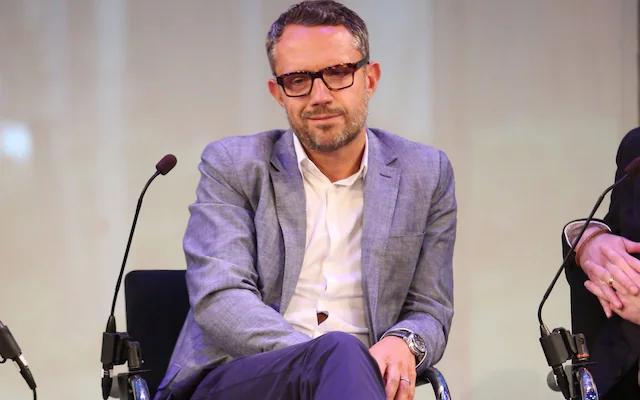
In October 2019, David Pemsel was selected as the incoming chief executive of the Premier League. The appointment was notable because it demonstrated how his experience in media and commercial transformation could be applied to the increasingly digital and global sports business. The Premier League was dealing with complicated questions around broadcasting, technology, international audiences and relationships between its clubs. However, the appointment lasted only briefly. In November 2019, Pemsel resigned before beginning the position following media disclosures concerning his private life, and Richard Masters continued as interim chief executive.
The Importance of a Career Detour
The Premier League episode is an unusual part of David Pemsel’s professional history, but it also demonstrates how executive reputations can change rapidly. His appointment had initially been presented as recognition of his leadership at the Guardian and his ability to manage transformation. Yet the subsequent resignation meant that the proposed transition never became a working chapter of his career. For a media executive, it was a reminder that leadership is shaped not only by strategy and results, but also by public scrutiny, reputation and the expectations attached to highly visible institutions.
From Media to Fashion and Creative Industries
Rather than disappearing from public professional life, David Pemsel continued working across the creative economy. He became associated with ScienceMagic.Inc, a communications and brand-building agency, and in 2022 was appointed chairman of the British Fashion Council. The move was significant because fashion, like journalism, operates at the intersection of culture and commerce. Brands depend on creativity, but they also depend on audiences, communication, international markets and changing consumer behaviour. His transition therefore represented less of a departure than it might initially appear.
David Pemsel and the Changing Meaning of Media Leadership
The career of David Pemsel offers a useful window into how executive roles have evolved. Older models often separated editorial, commercial and technological responsibilities into distinct areas. Today, those boundaries are considerably less clear. A media leader may need to understand subscriptions, digital products, advertising, brand reputation, international audiences and organisational culture simultaneously. Pemsel’s movement from advertising to television, then publishing and later creative-sector leadership reflects this increasingly interconnected professional landscape.
What His Career Says About Modern Creative Businesses
There is also a wider cultural lesson in David Pemsel’s career. Newspapers, football competitions and fashion institutions appear very different on the surface, yet all depend on attention. They compete for people’s time, loyalty and emotional investment. Furthermore, each industry has been transformed by digital technology, global audiences and changing expectations around brands. This makes the modern creative executive less like a conventional administrator and more like a translator between culture, business and technology.
A Legacy Built Around Transformation
David Pemsel’s strongest professional legacy remains connected to Guardian Media Group and its difficult journey toward greater financial sustainability. His leadership period coincided with significant changes in reader revenue, digital strategy and organisational structure, culminating in an operating profit for the group after years of financial difficulty. He was subsequently recognised as Media Leader of the Year at the 2019 Media Week Awards, an acknowledgement of the transformation achieved during his tenure.
Conclusion
David Pemsel’s career is ultimately a story about adaptation. From advertising agencies to ITV, from Guardian Media Group to an unexpected Premier League appointment and later the British Fashion Council, his professional path has repeatedly crossed industries undergoing profound change. His time at the Guardian remains the defining chapter, particularly because it demonstrated how financial strategy and cultural purpose can exist in the same conversation. More broadly, his career illustrates a modern reality: successful leadership in creative industries increasingly depends on understanding not just products and profits, but audiences, technology, trust and the changing ways people participate in culture.