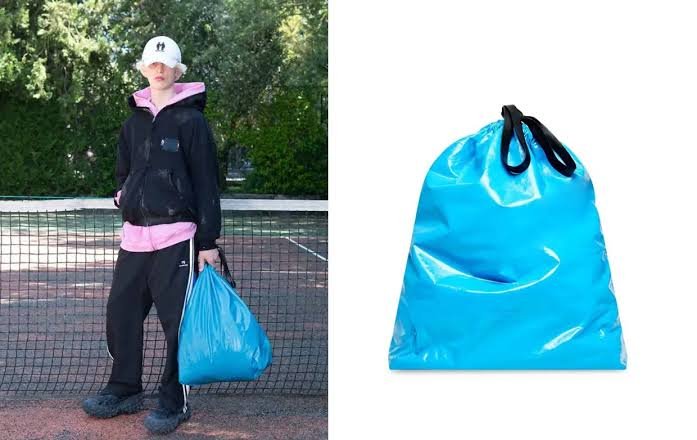
Balenciaga Trash Bag: Few fashion items have sparked as much curiosity and debate as a luxury handbag designed to resemble an ordinary garbage bag. When Balenciaga presented its trash-bag-inspired accessory, the fashion world was reminded that luxury does not always depend on traditional beauty, polished finishes, or familiar shapes. Instead, the design challenged people to reconsider what makes an object fashionable, desirable, and worthy of an extraordinary price. Beyond its unusual appearance, the bag opened a wider conversation about branding, consumer culture, artistic experimentation, and the changing meaning of luxury.
The Unusual Design Behind Balenciaga Trash Bag
At first glance, the Balenciaga Trash Bag looks surprisingly ordinary. Its loose silhouette, gathered opening, and glossy material recall the familiar plastic bags used for everyday household waste. However, the difference lies in its designer identity, construction, and presentation. Rather than hiding its resemblance to a disposable object, the design makes that resemblance central to its appeal. Consequently, something normally associated with convenience and low cost becomes an object that attracts attention in luxury fashion.
The design reflects Balenciaga’s willingness to challenge conventional ideas about accessories. Traditionally, expensive handbags have emphasized carefully structured shapes, recognizable leather finishes, and decorative details. By contrast, this bag plays with an object people rarely associate with elegance. Its unconventional appearance encourages viewers to look twice, question their assumptions, and consider whether luxury depends on the material itself or the meaning attached to it.
How Balenciaga Challenged Traditional Ideas of Luxury
Luxury fashion has long relied on craftsmanship, exclusivity, heritage, and visual distinction. Nevertheless, contemporary designers increasingly experiment with ordinary objects, exaggerated proportions, distressed finishes, and unconventional materials. The Balenciaga Trash Bag fits within this broader movement, where familiar items become artistic statements through design and context.
Moreover, the concept challenges the belief that expensive fashion must look expensive. A traditional leather handbag often communicates value through its finish and recognizable craftsmanship. This design takes a different approach by making its everyday resemblance impossible to ignore. As a result, its appeal depends partly on surprise, irony, and the reputation of the fashion house behind it.
However, the design also raises a reasonable question: when an ordinary-looking object carries a luxury label, what exactly is the customer purchasing? The answer may include design, craftsmanship, brand recognition, exclusivity, and participation in a cultural conversation. For some buyers, that combination makes the item interesting. For others, it demonstrates how branding can influence perceptions of value.
The Story Behind the Fashion World’s Reaction
The Balenciaga Trash Bag attracted attention because it blurred the boundary between fashion and satire. People who encountered the design could interpret it in several ways. Some viewed it as a clever challenge to conventional taste, while others considered it an example of luxury fashion becoming unnecessarily provocative.
That disagreement helped make the accessory culturally interesting. In an era when unusual runway designs can quickly circulate across social media, a handbag that resembles a household rubbish bag provides an instantly understandable visual joke. People do not need specialist fashion knowledge to recognize the contrast between its appearance and its luxury positioning.
Furthermore, the reaction illustrates how modern fashion exists beyond the runway. A design can become part of public discussion through photographs, memes, commentary, and personal opinions. In this environment, controversy and curiosity can become significant parts of an item’s cultural visibility, even when people disagree about whether the design succeeds aesthetically.
Why an Ordinary Bag Can Become a Luxury Statement
The transformation of an everyday object into a luxury accessory depends on more than appearance. Context changes how people interpret objects, and fashion brands have considerable influence over that process. A simple silhouette presented in a prestigious fashion setting can acquire associations that would not exist in an ordinary shop.
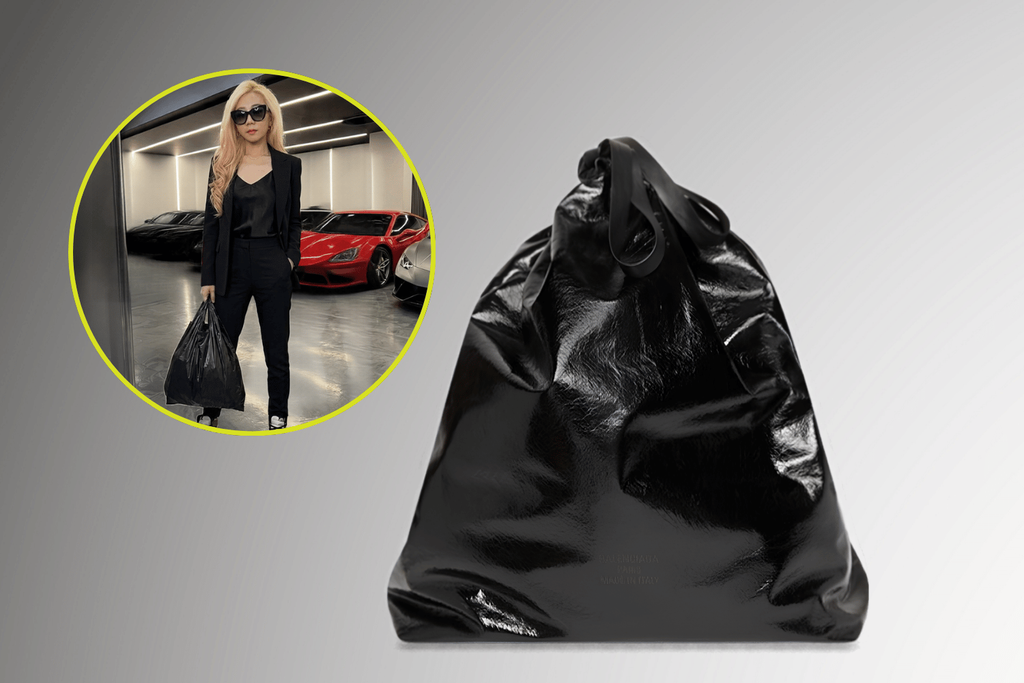
Consider the differences between a disposable household bag and a designer accessory inspired by one. The first is generally purchased for practical use, affordability, and convenience. The second is presented as a fashion product whose identity may depend on design intention, brand reputation, and its ability to attract attention. Although the objects share a visual reference, their intended roles and cultural meanings are different.
Nevertheless, this distinction does not mean every unusual design automatically deserves its price. Consumers can appreciate creative experimentation while still questioning whether a product offers sufficient quality, usefulness, or personal value. In that sense, the Balenciaga Trash Bag invites people to think critically about the relationship between price, identity, and desire.
Social Media and the Power of a Provocative Design
Social media has changed the way fashion trends develop. Previously, runway collections were discussed primarily through fashion publications, industry professionals, and dedicated audiences. Today, an unconventional accessory can reach people who rarely follow luxury fashion at all.
The Balenciaga Trash Bag provides a strong example of a design that communicates its concept almost immediately. Its resemblance to an everyday object makes it easy to photograph, discuss, and reinterpret. Consequently, the conversation can move beyond traditional fashion criticism into discussions about wealth, taste, consumerism, and the limits of luxury branding.
At the same time, online attention does not necessarily indicate universal admiration. Some people share unusual designs because they appreciate their creativity, while others share them to criticize what they see as excessive pricing or unnecessary extravagance. Both reactions can extend a product’s visibility, although they represent very different attitudes toward it.
This is an important feature of contemporary fashion culture: attention and approval are not the same thing. A product can become widely recognized because it provokes a strong response, even when audiences remain divided about its value.
Balenciaga Trash Bag and the Economics of Brand Value
One of the most revealing aspects of the Balenciaga Trash Bag is the discussion it creates around pricing. When consumers see an object that resembles something inexpensive, a luxury price can appear difficult to understand. Yet designer products are rarely priced according to raw materials alone.
Brand positioning, production methods, creative direction, distribution, marketing, and exclusivity can all influence the price of a luxury accessory. In addition, some customers pay for the experience and symbolism associated with a fashion house rather than practical function alone.
However, the role of branding deserves careful consideration. A recognizable name can influence how consumers perceive an item, but it does not automatically establish that the product is worth its price to every individual. Value remains partly subjective, shaped by personal taste, financial priorities, and the importance someone places on fashion as a form of expression.
Therefore, the bag offers a useful case study in the economics of luxury. It demonstrates how design and reputation can transform perceptions of an object, while also reminding consumers that a product’s market price and personal worth are not necessarily identical.
What the Design Says About Modern Consumer Culture
The appeal and criticism surrounding unconventional luxury accessories reveal something about contemporary consumption. Many consumers increasingly encounter fashion through images, online discussions, and highly visible brand statements. As a result, an item’s ability to generate conversation may become part of its appeal.
The Balenciaga Trash Bag also raises questions about disposability. The visual reference to a garbage bag brings an ordinary symbol of waste into a setting associated with aspiration and exclusivity. This contrast can encourage reflection on materialism, consumer habits, and the ways society assigns importance to objects.
However, it would be simplistic to assume that every customer interprets the design as a serious critique of consumer culture. Some may simply enjoy its unusual shape, while others may regard it as humorous, collectible, or visually distinctive. The same product can communicate different ideas depending on the person viewing it.
Ultimately, its cultural significance lies partly in this openness to interpretation. It shows how fashion can operate simultaneously as a commercial product, a creative experiment, and a subject for public debate.
Is the Balenciaga Trash Bag Practical or Mainly Conceptual?
The bag’s unusual appearance naturally raises questions about everyday use. Compared with conventional handbags, its design places greater emphasis on visual impact and conceptual identity. Nevertheless, whether it is practical depends on its actual construction, dimensions, materials, closure, and the needs of its owner.
A fashion accessory does not have to serve only one purpose. Some bags prioritize organization and durability, while others emphasize appearance, collectability, or an unconventional design language. Buyers considering an unusual luxury accessory should therefore distinguish between its visual concept and its practical features.
Before purchasing any designer bag, it is sensible to check the official product specifications, materials, measurements, and care instructions. It is also worth considering whether the accessory suits everyday routines or would be used mainly for particular outfits and occasions. These details matter more to an individual buyer than the attention a design receives online.
The central question is not whether an unconventional bag is inherently useful or useless. Rather, it is whether its design and function align with what the buyer genuinely wants from an accessory.
Why Balenciaga Trash Bag Remains a Talking Point
The lasting interest in the Balenciaga Trash Bag comes from the tension between its familiar appearance and its luxury identity. It challenges the expectation that high fashion must always look elegant in conventional ways. At the same time, it exposes the complicated relationship between branding, price, social attention, and personal taste.
For fashion enthusiasts, the design can represent creative experimentation and a willingness to challenge established rules. For critics, it can symbolize the distance between luxury pricing and everyday usefulness. Both interpretations reveal how fashion products can become larger cultural symbols.
More broadly, the bag demonstrates that contemporary fashion is not limited to clothing or accessories that follow established ideas of beauty. It can also use irony, surprise, and familiar objects to encourage discussion. Whether someone admires the design or questions it, the conversation itself shows the influence fashion continues to have on ideas about identity and value.
Conclusion: When the Ordinary Becomes Extraordinary
The Balenciaga Trash Bag illustrates how a familiar everyday object can acquire an entirely different meaning when presented through the language of luxury fashion. Its unusual appearance challenges conventional ideas about beauty, while the debate surrounding it highlights the power of branding and the subjective nature of value.
Ultimately, the design is more than an unusual handbag. It is a reminder that fashion reflects the culture in which it exists, including its ambitions, contradictions, humor, and commercial pressures. Some people will see the bag as an inventive statement; others will see it as an example of luxury excess. Either way, its significance extends beyond its shape. It encourages a larger question that applies to luxury fashion as a whole: are we responding to the object itself, the name attached to it, or the meaning we have learned to associate with both?