Introduction
Lewis Hamilton and Ruth Porat have established influential careers in two very different professional worlds. Hamilton is an internationally recognized Formula One driver whose achievements have reshaped the sport’s modern history, while Porat is a respected financial executive whose leadership has helped guide major organizations in finance and technology. Although their careers do not represent a known shared professional journey, examining Lewis Hamilton and Ruth Porat together provides an opportunity to explore ambition, decision-making, representation, and the changing meaning of leadership in contemporary society.
Understanding Their Professional Backgrounds
Lewis Hamilton is a British racing driver known for his seven Formula One World Drivers’ Championship titles and his contributions to discussions about diversity in motorsport. Ruth Porat, born in Britain and raised partly in the United States, built her career in financial services before becoming a senior executive at Google and its parent company, Alphabet.
| Name | Field | Recognized for |
|---|---|---|
| Lewis Hamilton | Motorsport | Seven Formula One world championships and inclusion initiatives |
| Ruth Porat | Finance and technology | Leadership at Morgan Stanley and Alphabet |
Despite their different career paths, both individuals have operated in competitive environments where preparation, judgment, and teamwork are essential. Their achievements also demonstrate that influence can develop through athletic performance as well as through decisions made inside major institutions.
Lewis Hamilton’s Journey from Karting to Global Recognition
Hamilton’s success began with an early commitment to racing. His karting performances helped him progress through the motorsport development system before he made his Formula One debut with McLaren in 2007. Just one year later, he won his first world championship, demonstrating remarkable consistency and composure under pressure.
His subsequent move to Mercedes became a defining moment in his career. During the team’s dominant period in the hybrid era, Hamilton secured six additional championships, bringing his total to seven. These accomplishments placed him among the most successful drivers in Formula One history.
However, Hamilton’s influence extends beyond sporting statistics. He has used his visibility to discuss unequal access to motorsport and the importance of representation. Through Mission 44, he has supported initiatives aimed at expanding opportunities for young people. Consequently, his career offers an example of how sporting success can become a platform for wider social engagement.
Ruth Porat’s Role in Finance and Corporate Strategy
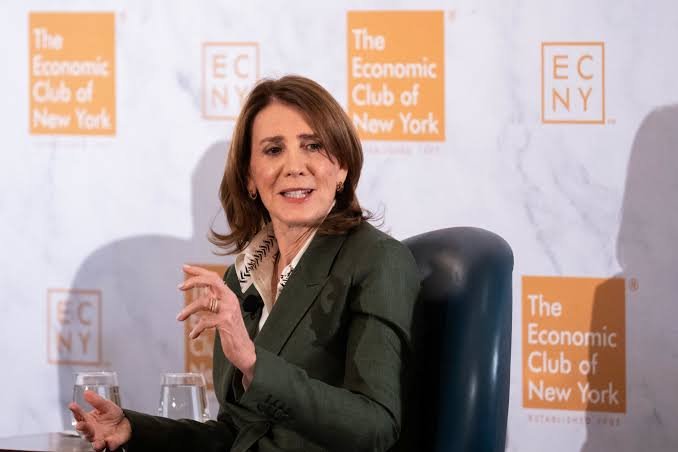
Porat’s professional journey illustrates the importance of financial expertise in shaping large organizations. Before joining Google as chief financial officer in 2015, she held senior positions at Morgan Stanley, gaining experience in investment banking, financial markets, and risk management.
At Google and Alphabet, her responsibilities involved financial planning, resource allocation, and maintaining discipline while the company pursued ambitious technological projects. In 2023, Alphabet announced her transition from CFO to president and chief investment officer, effective in 2024.
This role reflects the increasingly complex decisions facing global technology companies. Investments in computing infrastructure, research, and new products require careful evaluation of potential returns and long-term risks. Porat’s career therefore illustrates how financial leadership can influence innovation without being directly associated with the creation of individual products.
How Leadership Differs Across Their Industries
The careers of Hamilton and Porat reveal two contrasting models of leadership. Formula One is an environment in which performance is constantly measured and decisions can have immediate consequences. Drivers must communicate with engineers, interpret technical information, and respond quickly to changing circumstances.

Corporate finance operates on a different timetable. Executives assess financial forecasts, consider economic uncertainty, and make decisions whose results may take years to emerge. Nevertheless, the ability to evaluate information, remain adaptable, and communicate effectively remains important in both settings.
Furthermore, neither profession depends entirely on individual talent. Hamilton’s results are supported by engineers, mechanics, strategists, and other team members. Similarly, Porat’s work requires cooperation with colleagues across financial, operational, and executive teams. Their experiences demonstrate that effective leadership combines individual judgment with collective expertise.
Public Visibility and Institutional Influence
Hamilton’s career offers an especially visible example of the relationship between professional achievement and cultural influence. His sporting accomplishments have attracted audiences around the world, while his interest in fashion and social issues has helped broaden his public identity beyond racing.
Porat’s influence is expressed more directly through corporate leadership. Although financial executives may not receive the same public attention as elite athletes, their decisions can affect investment priorities, business strategy, and the development of technology.
As a result, their careers highlight an important distinction: visibility is one form of influence, but it is not the only one. Public figures can encourage conversations about social change, while executives can shape the institutions and resources through which economic and technological change occurs.
Opportunity and Representation in Professional Life
Access to opportunity is another theme that emerges from their experiences. Hamilton has discussed the barriers that can make motorsport difficult to enter, particularly the considerable financial resources required to progress through competitive racing. His advocacy reflects a desire to make the sport more accessible to people from different backgrounds.
Porat’s career provides a different perspective on professional advancement. Her senior positions in finance and technology demonstrate the potential for women to exercise substantial influence in sectors historically associated with male-dominated leadership structures.
Although their experiences should not be treated as equivalent, both illustrate the importance of developing expertise and creating pathways for advancement. Individual determination matters, but so do education, professional support, access to resources, and institutions willing to recognize talent.
Why Their Careers Remain Relevant
The modern understanding of success increasingly includes questions about responsibility and lasting impact. Hamilton’s career demonstrates how sporting excellence can coexist with efforts to expand participation and representation. Porat’s work highlights how financial decision-making influences the priorities of organizations operating at the center of technological change.
Moreover, their careers encourage a broader understanding of achievement. A championship represents measurable competitive success, while an investment decision may shape an organization’s direction over many years. These outcomes are difficult to compare directly, yet both require preparation, informed judgment, and accountability.
Considering their careers together is therefore useful as a comparison of professional influence, rather than as evidence of a direct personal or business relationship.
Conclusion
Lewis Hamilton and Ruth Porat illustrate two distinct routes to professional influence. Hamilton’s Formula One career combines exceptional sporting achievement with advocacy for greater inclusion, while Porat’s work in finance and technology demonstrates the importance of strategic planning and institutional leadership.
Ultimately, their stories show that success takes different forms depending on the environment in which it develops. Whether through competition on the racetrack or complex decisions within a global organization, meaningful leadership requires expertise, adaptability, and a willingness to consider the consequences of one’s actions. Their careers offer complementary perspectives on how individuals can influence their industries and contribute to broader conversations about opportunity, achievement, and responsibility.