
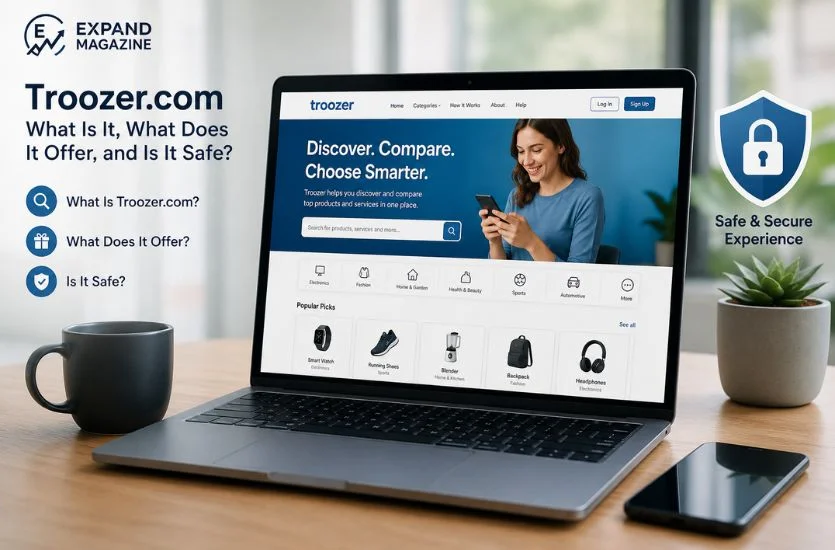
troozer com has become an intriguing search term because the name does not immediately tell visitors what they are looking at. Unlike a traditional brand built around one product or service, the platform is associated with a broad range of editorial subjects, from technology and business to finance, education, lifestyle, travel, health, law, and real estate. Available descriptions characterize it primarily as a multi-category digital media and publishing platform rather than a conventional online store or software application.
That distinction is important. The modern internet is crowded with websites whose identities can be difficult to understand from a domain name alone. In this environment, troozer com illustrates a broader change in digital publishing: readers increasingly encounter information through individual searches rather than by entering a publication through its homepage. Consequently, understanding what a platform publishes, how it organizes information, and how carefully readers should evaluate its claims can be more useful than judging it by its name.
Troozer Com and the Rise of the General-Interest Digital Publisher
The most useful way to understand troozer com is as a broad online publication. Rather than restricting itself to one specialist subject, the site is associated with articles spanning multiple areas of everyday interest. Current descriptions specifically connect it with technology, finance, business, health, education, lifestyle, travel, law, home improvement, and real estate.
This model reflects an important shift in how people consume information. Traditionally, a reader might visit a technology magazine for technology stories and a financial publication for money-related coverage. Today, however, search engines frequently deliver individual articles without requiring readers to develop loyalty to one publication. Therefore, a multi-category website can meet readers at the precise moment they are looking for an answer.
Why the Name Creates So Much Curiosity
One reason troozer com attracts attention is that its identity has sometimes been described inconsistently across third-party websites. Some online articles have portrayed the domain as a productivity service, marketplace, AI workspace, or other type of digital platform, while more recent descriptions identify it as a content publisher.
That contradiction reveals something significant about the modern web. A website’s reputation can be shaped not only by its own pages but also by the descriptions that appear elsewhere. Once an inaccurate characterization is repeated often enough, it can begin to look authoritative simply because it is familiar. For readers, therefore, the sensible approach is to distinguish between what a website visibly provides and what outside articles merely claim.
The Editorial Breadth Behind Troozer Com
The appeal of a multi-topic publication lies partly in its ability to follow the varied interests of ordinary readers. Someone researching a technology question may later search for financial information, a home improvement idea, or an educational resource. Consequently, a broad editorial environment can feel closer to the way people actually browse the internet.
At the same time, breadth creates an editorial challenge. A publication covering many subjects must maintain consistent standards even when the expertise required for one topic differs substantially from another. Finance, health, technology, law, and real estate all involve different expectations for accuracy and context. Thus, the wider the subject range becomes, the more important careful sourcing and responsible presentation are.
A Digital Magazine Without a Traditional Magazine Identity
There is an interesting cultural difference between a conventional magazine and a digital publisher such as troozer com. Print magazines historically established a recognizable voice through editors, recurring columns, visual design, and a relatively stable readership. Digital publishers often operate differently, with articles optimized for discovery through search and organized into numerous categories.
This does not necessarily make one model better than the other. Instead, it reflects changing reading habits. Readers may discover an article through a search engine, social post, recommendation, or shared link and never encounter the publication’s wider editorial ecosystem. Therefore, digital publishing places greater importance on making individual articles understandable and useful on their own.
What Readers Can Find Across the Platform
Available descriptions suggest a wide editorial mix rather than a single specialized service. The following overview illustrates the broad categories associated with the publication:
| Area | Typical reader interest |
|---|---|
| Technology | Digital trends, devices, software, and online developments |
| Business | Companies, entrepreneurship, markets, and workplace subjects |
| Finance | Money-related information and financial topics |
| Education | Learning, academic subjects, and educational resources |
| Lifestyle | Everyday interests, trends, and practical ideas |
| Travel | Destinations, planning, and travel-related information |
| Health | General health and wellness topics |
| Home & Property | Home improvement, housing, and real-estate subjects |
The value of such breadth depends on execution. A large number of categories alone does not create a strong publication; instead, readers benefit when every article has a clear purpose, appropriate context, and a level of research suited to its subject.
The Difference Between Information and Authority
For readers exploring troozer com, perhaps the most important consideration is not simply whether the website exists, but how individual information should be assessed. A professional-looking webpage can still contain incomplete or outdated information. Conversely, an unfamiliar publication can occasionally provide a useful starting point.
Therefore, readers should consider several signals when evaluating an article:
- Who is responsible for the content?
- When was the article published or updated?
- Does the subject require specialist expertise?
- Are important claims supported by credible sources?
- Is the language informative rather than excessively promotional?
- Can important facts be confirmed through independent sources?
These questions are especially valuable for subjects such as health, finance, law, and property, where inaccurate information can have consequences beyond a simple misunderstanding.
Troozer Com in the Age of Search-First Journalism
Search-first journalism has changed the relationship between readers and publishers. Instead of beginning with a publication and exploring its contents, many people begin with a question. The search engine then becomes the doorway, while the article becomes the destination.
That environment creates both opportunity and responsibility. A platform like troozer com can reach readers interested in highly different subjects because its editorial categories are broad. However, search visibility should never be confused with editorial authority. Ranking well answers the question of discoverability; it does not, by itself, answer the question of reliability.
Why Transparency Matters More Than Ever
Transparency has become one of the defining expectations of digital publishing. Readers increasingly want to understand who produces information, why an article exists, when it was created, and whether the material represents reporting, commentary, or general guidance.
This is particularly relevant for troozer com because conflicting descriptions have appeared elsewhere online. One recent discussion from the Troozer brand account explicitly characterized the platform as a digital media and publishing operation and stated that it is not a marketplace, financial service, or software tool.
Such distinctions help establish clearer expectations. If visitors understand that they are reading editorial material rather than using a transactional service, they can approach the website according to what it actually provides.
The Human Side of Reading Across Many Subjects
Behind the technical language of domains, categories, search rankings, and publishing platforms is a very human activity: curiosity. People search because they want to understand something, solve a problem, compare possibilities, or simply discover something unfamiliar.
That makes the role of an online publisher more personal than it may first appear. A technology article might help someone make a purchase decision. A business story might encourage a new entrepreneur. A travel guide might influence a holiday. Even a modest home-improvement article can become useful when a reader is standing in a room wondering how to fix a problem.
Consequently, the real measure of a digital publication is ultimately the experience it creates for the reader.
Is Troozer Com a Marketplace, Tool, or Publication?
Based on the stronger available descriptions and the visible publishing structure reported by multiple sources, troozer com is best treated as a multi-category digital publication. Claims portraying it as an e-commerce marketplace, productivity dashboard, or AI workspace are not consistently supported by the site’s apparent editorial structure.
That clarification matters because expectations influence how people interact with a website. Someone searching for an online store expects products, payment systems, and transactions. Someone seeking software expects accounts, tools, and functional interfaces. A reader visiting a publishing platform instead expects articles and information. Knowing which category a website belongs to makes the online experience considerably easier to interpret.
A Sensible Way to Explore the Platform
Readers who encounter troozer com for the first time do not need to approach it with either automatic trust or automatic suspicion. A more balanced approach is to explore the content while applying ordinary digital literacy.
First, identify the purpose of the specific page. Then check its publication date and author information where available. For important claims, compare the information with established primary or specialist sources. Finally, avoid treating a general-interest article as professional advice when the subject involves significant financial, legal, medical, or personal decisions.
This approach is useful not only for troozer com but for almost every unfamiliar publication encountered through search.
The Bigger Story Behind Troozer Com
Perhaps the most interesting aspect of troozer com is not the domain itself but what it represents. The internet has moved steadily toward a world where publishing is less dependent on traditional boundaries. A website can discuss technology in one article, education in another, and business in the next, reflecting the fragmented way audiences now discover information.
Moreover, the confusion surrounding the domain demonstrates why digital literacy has become essential. Readers must increasingly separate a site’s actual function from descriptions created by third parties. In that sense, researching troozer com becomes a small example of a much larger challenge: determining what deserves attention in an internet filled with information.
Conclusion: Understanding the Platform Behind the Search Term
troozer com is best understood through its role as a broad digital publishing platform rather than through the more speculative descriptions that have circulated online. Its multi-category approach reflects contemporary reading habits, where people move between technology, business, finance, lifestyle, education, travel, and other subjects according to immediate curiosity.