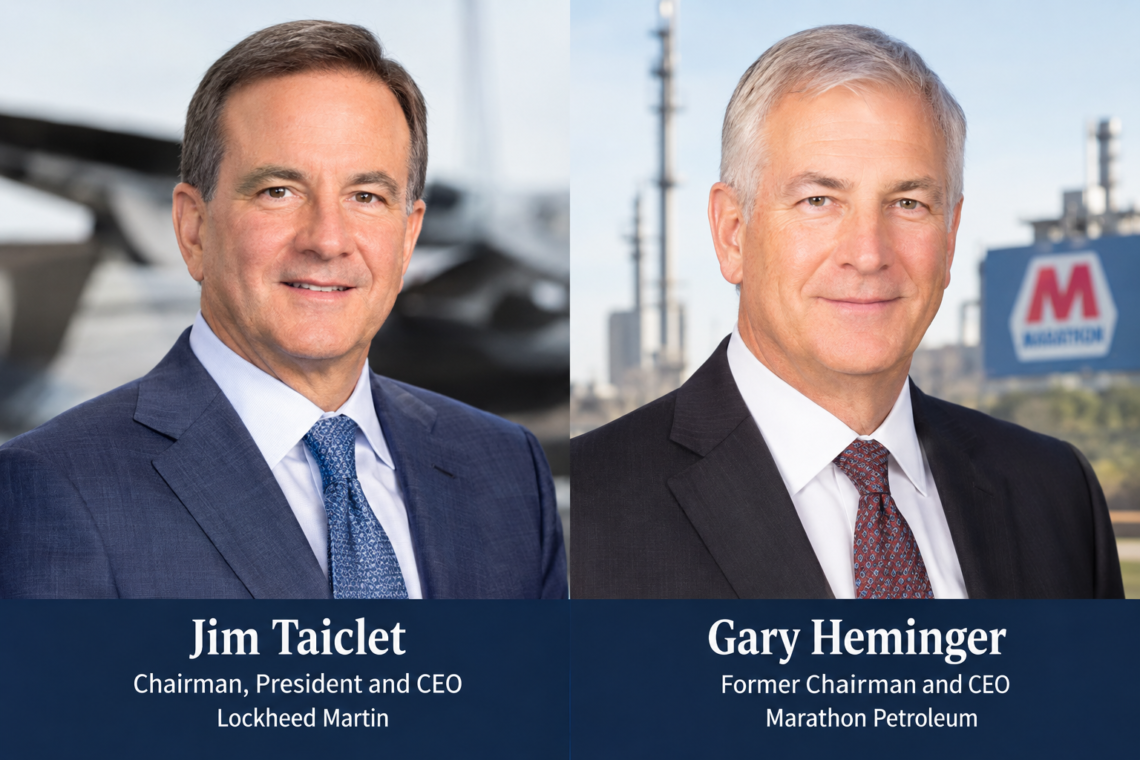
Jim Taiclet and Gary Heminger: Two Distinct Stories of Business Leadership
Jim Taiclet and Gary Heminger have established their professional reputations in different sectors of American industry. Taiclet is associated with aerospace, defense technology, and communications infrastructure, while Heminger built his career in petroleum refining and energy management. Although their professional journeys followed different directions, both demonstrate the importance of strategic planning, operational knowledge, and the ability to manage complex organizations. Their careers also provide a useful perspective on how industrial leaders respond to technological developments, changing markets, and the growing responsibilities that accompany executive decision-making.
Jim Taiclet’s Transition from Military Aviation to Corporate Management
Jim Taiclet’s career began with military service, where he served as an officer and pilot in the United States Air Force. This experience exposed him to the importance of technical preparation, teamwork, and operational discipline. These qualities would later become relevant as he moved into the corporate world and assumed responsibility for large technology-oriented businesses.
Before joining Lockheed Martin, Taiclet led American Tower Corporation, a company specializing in wireless communications infrastructure. His work there involved managing a business whose services support modern telecommunications networks. Consequently, he gained experience in infrastructure investment, technology, and international business operations.
In June 2020, Taiclet became president and chief executive officer of Lockheed Martin, followed by his appointment as chairman in March 2021. His leadership has taken place during a period when aerospace and defense companies face increasing demand for advanced systems, digital capabilities, and more integrated technologies.
Gary Heminger’s Longstanding Connection to the Energy Sector
Gary Heminger developed his career through decades of experience at Marathon. He joined the organization in 1975 and worked across several functions, including finance, marketing, and business development. This broad professional exposure gave him insight into the relationships between commercial planning, operational performance, and financial management.
Heminger became president and chief executive officer of Marathon Petroleum in 2011 and chairman in 2016. During his tenure, the petroleum industry experienced significant market changes, including fluctuations in fuel demand, shifts in refining economics, and increasing attention to environmental performance.
He retired from Marathon Petroleum’s leadership in 2020. His career illustrates how sustained experience within a major industrial organization can help executives understand the practical challenges of managing large operations. Furthermore, his professional history demonstrates the value of learning how different business functions contribute to an organization’s overall performance.
Comparing the Professional Backgrounds of Both Executives
Although Taiclet and Heminger worked in different industries, their careers reveal important similarities in the responsibilities of senior management.
| Category | Jim Taiclet | Gary Heminger |
|---|---|---|
| Primary industry | Aerospace and defense | Petroleum and energy |
| Major company | Lockheed Martin | Marathon Petroleum |
| Professional background | Military aviation and corporate leadership | Energy operations and business management |
| CEO appointment | Lockheed Martin, 2020 | Marathon Petroleum, 2011 |
| Core business priorities | Technology, manufacturing, defense capabilities | Refining, infrastructure, energy markets |
Their professional experiences highlight two different approaches to executive development. Taiclet combined military service with leadership in communications infrastructure and aerospace. Heminger developed extensive industry knowledge through a long career in the petroleum business. Both paths demonstrate that leadership benefits from an understanding of how organizations operate in practice.
Innovation and Strategic Thinking in the Defense Industry
The aerospace and defense industry depends on continuous technological development. Modern systems often combine advanced engineering, software, communications, sensors, and complex manufacturing processes. Therefore, companies must continually evaluate how emerging technologies can improve performance while meeting demanding reliability and production requirements.
For Lockheed Martin, these challenges involve coordinating research, manufacturing, suppliers, and customer expectations. In addition, defense projects frequently require long-term planning because major systems can take years to develop and deliver.
Taiclet’s leadership experience reflects the growing importance of connecting technological innovation with business strategy. However, innovation alone is insufficient. Companies must also manage costs, maintain production capacity, and ensure that sophisticated systems meet their intended operational requirements.
Energy Infrastructure and the Challenges of Industrial Management
The petroleum industry presents a different set of strategic concerns. Refining operations require substantial infrastructure, specialized equipment, transportation networks, and careful management of operational risks. At the same time, market conditions can change rapidly as fuel demand, crude oil prices, and refining margins fluctuate.
Heminger’s career at Marathon Petroleum unfolded against this demanding commercial background. Managing a major energy company required attention to financial performance, operational efficiency, investment decisions, and the reliability of its facilities.
Furthermore, the industry has faced increasing discussion about environmental impacts and the longer-term evolution of energy consumption. These issues create difficult decisions for business leaders, who must balance present-day operational needs with changing expectations from customers, regulators, and investors.
How Leadership Decisions Affect Employees and Communities
Corporate leadership is not defined solely by financial results. Large industrial organizations also influence employees, suppliers, customers, and communities that depend on their activities.
In aerospace and defense, engineers and production teams contribute to complex projects that require extensive cooperation. In energy, refinery employees and logistics specialists help maintain the infrastructure that supports transportation and manufacturing. Both industries therefore rely on skilled workforces and effective communication between departments.
Consequently, successful executives must establish clear objectives, manage risks, and support collaboration. They must also consider how decisions affect the people responsible for carrying out organizational plans. Taiclet’s technical and corporate experience and Heminger’s longstanding industry knowledge offer different perspectives on the relationship between leadership and operational responsibility.
Lessons from Their Different Career Paths
The careers of Jim Taiclet and Gary Heminger demonstrate that there is no single route to executive leadership. Taiclet’s background shows how experience across military service, communications infrastructure, and defense can contribute to a broad managerial perspective. Heminger’s career illustrates the advantages of developing deep knowledge within one industrial organization.
Nevertheless, both paths depend on the ability to learn, evaluate complex situations, and make informed decisions. Executives must understand their industries while remaining prepared to respond to unexpected developments. They must also recognize that long-term success depends on the interaction between people, technology, investment, and operational performance.
These lessons apply well beyond the sectors associated with these two executives. Manufacturing, transportation, telecommunications, and other infrastructure-intensive businesses face similar questions about innovation, efficiency, and sustainable growth.
Conclusion: Understanding Leadership Through Two Industrial Careers
Jim Taiclet and Gary Heminger offer two distinct examples of leadership in American industry. Taiclet’s career connects military aviation with communications infrastructure and advanced defense technology, while Heminger’s professional history reflects decades of experience in petroleum operations and energy management.
Their careers reveal that effective leadership depends on more than a prestigious title or a successful business strategy. It requires practical knowledge, thoughtful decision-making, the ability to guide people, and an understanding of the forces shaping an industry.
Ultimately, comparing these executives provides a broader perspective on how major organizations navigate change. Whether the challenge involves advanced defense systems or essential energy infrastructure, leaders must balance immediate operational demands with long-term objectives. That responsibility remains central to the future of modern industry.