Introduction
John Wayne and Maureen O’Hara remain one of classic Hollywood’s most recognizable screen pairings, celebrated for their memorable performances, spirited exchanges, and remarkable chemistry. Together, they helped shape the identity of several beloved films, combining the rugged atmosphere of traditional Westerns and adventures with warmth, humor, and emotional depth. Moreover, their collaborations reflected a particular era of filmmaking when strong personalities and carefully developed characters could make a lasting impression. Although both actors enjoyed successful careers independently, their shared cinematic legacy continues to attract audiences interested in classic movies, Hollywood history, and the enduring appeal of on-screen partnerships.
Who Were John Wayne and Maureen O’Hara?
John Wayne and Maureen O’Hara became major figures in Hollywood through different career paths, yet their talents complemented each other remarkably well. Wayne developed an enduring image as a confident, rugged leading man, while O’Hara became known for her expressive performances, fiery independence, and commanding screen presence. Together, they created characters who could challenge one another, exchange sharp dialogue, and convey affection without sacrificing their individuality.
| Celebrity | Background and Career | Lasting Legacy |
|---|---|---|
| John Wayne | American actor famous for Westerns, war films, and adventure dramas | Became one of Hollywood’s defining representations of the American frontier |
| Maureen O’Hara | Irish-born actress celebrated for adventure films, dramas, and comedies | Earned recognition for portraying spirited, intelligent, and independent women |
| Their screen partnership | Collaborated in five feature films | Created a memorable combination of humor, romance, adventure, and dramatic tension |
Their partnership worked because neither performer disappeared into the other’s shadow. Instead, their contrasting personalities gave their shared scenes energy and helped distinguish their films from more conventional romantic pairings.
How Their Hollywood Partnership Began
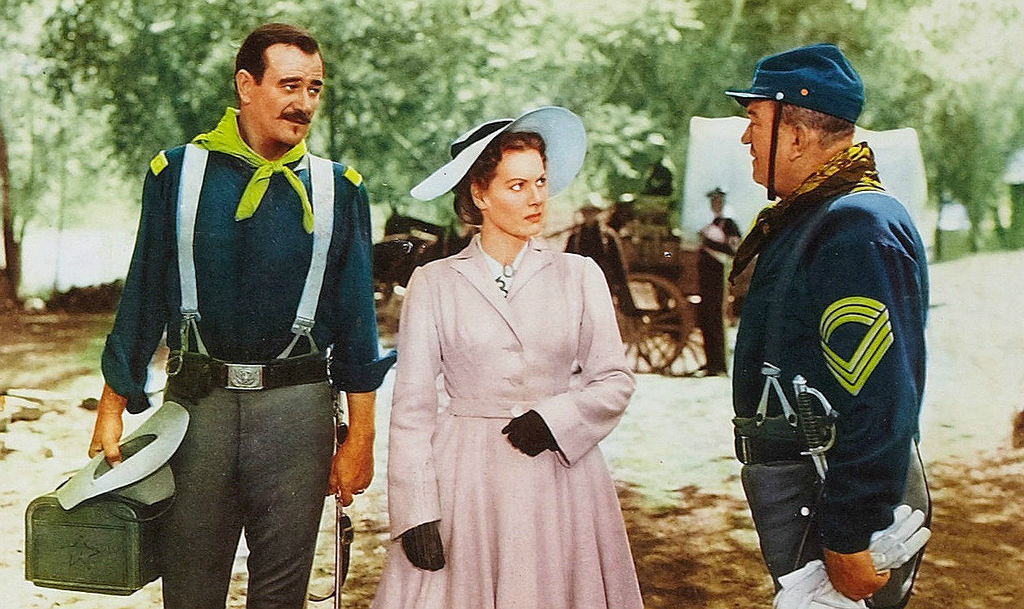
The cinematic relationship between Wayne and O’Hara developed during a period when Hollywood studios relied heavily on recognizable stars and established genres. Their first film together was Rio Grande (1950), directed by John Ford. Set against the American frontier, the Western introduced audiences to a screen partnership that would become increasingly familiar over the following decades.
Although Wayne was already closely associated with Westerns, O’Hara brought a different dimension to the story. Her character added emotional complexity to a narrative shaped by military duty, family separation, and personal reconciliation. Consequently, their scenes established a useful balance between action and human drama.
Their collaboration also benefited from John Ford’s distinctive directing style. Ford understood how landscapes, silence, family relationships, and restrained dialogue could contribute to storytelling. Rather than relying entirely on spectacle, he allowed the actors to develop tension through their interactions, giving their partnership a natural rhythm.
The Films That Defined Their Shared Legacy
The lasting appeal of John Wayne and Maureen O’Hara becomes especially clear when their films are considered together. Each production explored a different setting or emotional conflict, demonstrating that their partnership could extend beyond a single genre.
Rio Grande (1950)
Rio Grande introduced the pair as co-stars in a story involving military responsibilities and a strained family relationship. Wayne portrayed Lieutenant Colonel Kirby Yorke, while O’Hara played Kathleen Yorke, his estranged wife. Their characters’ unresolved history provided an emotional foundation for the film’s frontier action.
Furthermore, the production established a pattern that would appear in later collaborations: Wayne’s restrained authority met O’Hara’s emotional directness. Their disagreements felt connected to the characters’ circumstances rather than merely serving as romantic decoration.
The Quiet Man (1952)
Among their collaborations, The Quiet Man remains particularly celebrated. Directed by John Ford and filmed largely in Ireland, the romantic comedy-drama follows Sean Thornton, played by Wayne, as he returns to his ancestral homeland and becomes involved with Mary Kate Danaher, portrayed by O’Hara.
The Irish countryside contributes significantly to the film’s atmosphere. Green fields, village streets, traditional customs, and communal celebrations create a setting that feels inseparable from the story.
However, the film’s appeal extends beyond its picturesque scenery. O’Hara’s Mary Kate is outspoken and determined, challenging Sean rather than simply accepting his decisions. Their relationship develops through humor, disagreement, affection, and cultural expectations.
The film received several Academy Award nominations and won awards for John Ford’s direction and Winton C. Hoch’s cinematography. Its continuing popularity demonstrates how a distinctive setting, memorable performances, and carefully constructed visual storytelling can preserve a film’s appeal across generations.
The Wings of Eagles (1957)
In The Wings of Eagles, Wayne and O’Hara moved into a biographical drama inspired by naval aviator Frank W. Wead. Wayne portrayed Wead, while O’Hara played his wife, Minnie.
Unlike the romantic adventures associated with their partnership, this film explored professional ambition, personal sacrifice, and the consequences of a demanding military career. As a result, their performances required a more serious emotional approach.
The story also expanded the range of their screen relationship. Their characters faced challenges connected to disability, family responsibilities, and changing professional circumstances. This emphasis on resilience gave the film a different emotional character from their lighter collaborations.
McLintock! (1963)
With McLintock!, Wayne and O’Hara returned to comedy, playing George Washington McLintock and Katherine McLintock. Loosely inspired by Shakespeare’s The Taming of the Shrew, the Western comedy places a wealthy rancher and his independent estranged wife at the center of a lively family story.
O’Hara’s performance is central to the film’s comic energy. She matches Wayne’s larger-than-life presence with sharp dialogue and an equally forceful personality. Meanwhile, the Western setting provides opportunities for social satire, family conflict, and exaggerated humor.
Modern audiences may interpret some of the film’s relationship dynamics differently from viewers in the 1960s. Nevertheless, its popularity illustrates the appeal of familiar stars working within an established genre while bringing their own personalities to the material.
Big Jake (1971)
Their final feature-film collaboration was Big Jake, a Western directed by George Sherman. Wayne portrayed Jacob McCandles, a man drawn into a dangerous rescue after his grandson is kidnapped. O’Hara played Martha McCandles, his estranged wife.
The film returned the actors to the themes of family loyalty, independence, and frontier survival. However, their characters were older and carried a more complicated shared history, lending their interactions additional weight.
By this stage, audiences already associated Wayne and O’Hara with a particular kind of Hollywood storytelling. Their reunion therefore carried the appeal of familiarity while allowing them to portray characters shaped by time and experience.
Why Their On-Screen Chemistry Worked
The chemistry between John Wayne and Maureen O’Hara was not simply a matter of romantic attraction written into scripts. Instead, it emerged from the contrast between their screen personas and their ability to sustain convincing exchanges.
Wayne often played characters whose authority came from quiet confidence, physical presence, and a reluctance to express vulnerability directly. O’Hara, by contrast, frequently portrayed women who expressed their feelings openly and challenged the people around them. This contrast gave their scenes momentum.
Moreover, O’Hara could match Wayne’s commanding presence without imitating his style. Her characters had opinions, emotional complexity, and their own sense of purpose. Consequently, their relationships often felt like encounters between two strong personalities rather than stories built around a dominant leading man and a passive romantic interest.
Their timing also mattered. Both performers understood how a pause, a raised eyebrow, or a short exchange of dialogue could communicate more than an elaborate speech. This quality helped their performances remain engaging even when the surrounding stories followed familiar conventions.
Friendship Beyond the Screen
The relationship between Wayne and O’Hara became an important part of their public legacy. O’Hara spoke warmly about Wayne in later years, and their professional association was often described in terms of mutual respect and lasting friendship.
Nevertheless, it is important to distinguish their documented professional relationship from the romantic relationships portrayed in their films. Their screen chemistry encouraged audiences to imagine enduring romantic connections, but the appeal of their partnership does not require speculation about a private romance.
Their friendship also reflected the collaborative nature of classic Hollywood. Actors frequently returned to successful creative partnerships because established trust could improve communication, performance, and the overall working atmosphere. In Wayne and O’Hara’s case, their repeated collaborations allowed audiences to recognize a familiar combination while discovering new dimensions in each film.
The Cultural Significance of Their Films
The films featuring Wayne and O’Hara preserve a particular vision of Hollywood storytelling. Western landscapes, traditional family structures, personal honor, and community expectations frequently shape their narratives. These themes helped make their movies recognizable to audiences of their time.
At the same time, their films offer opportunities for contemporary reflection. Wayne’s screen persona became closely associated with traditional American masculinity, while O’Hara’s performances often introduced women who resisted being controlled by the men around them. The tension between these qualities could generate both comedy and drama.
Their work also connected American popular cinema with Irish cultural imagery, particularly in The Quiet Man. The film’s depiction of rural Ireland helped popularize a romanticized vision of Irish life for international audiences. Although its representation should not be mistaken for a complete picture of Irish society, its visual identity remains influential in discussions of Hollywood’s relationship with cultural heritage.
Ultimately, their shared filmography reveals how entertainment can preserve the attitudes of one period while inviting new interpretations from later generations.
Why Audiences Still Remember John Wayne and Maureen O’Hara
Classic films continue to find audiences through television broadcasts, home viewing, film festivals, retrospectives, and online discussions. Wayne and O’Hara benefit from this continuing interest because their collaborations combine recognizable storytelling with performances that remain distinctive.
For longtime fans, their films offer nostalgia for a different era of cinema. For younger viewers, they provide an opportunity to explore the conventions of classic Hollywood and compare them with modern filmmaking.
Furthermore, their partnership demonstrates the value of strong supporting relationships between performers. Although both actors could command a film independently, their shared scenes often created something more engaging than either star’s established persona alone.
The films also invite discussion about changing expectations surrounding gender, family, and heroism. Rather than treating these older productions as either flawless masterpieces or outdated relics, viewers can appreciate their craftsmanship while critically considering the social assumptions that shaped them.
Frequently Asked Questions
How many films did John Wayne and Maureen O’Hara make together?
They appeared together in five feature films: Rio Grande (1950), The Quiet Man (1952), The Wings of Eagles (1957), McLintock! (1963), and Big Jake (1971).
Were John Wayne and Maureen O’Hara romantically involved in real life?
Their professional relationship and friendship were widely remembered, but their screen chemistry should not be treated as evidence of a real-life romantic relationship.
Which film featuring the pair is most celebrated?
The Quiet Man is among their best-known collaborations, particularly for its Irish setting, romantic comedy, and John Ford’s direction.
Who directed most of their shared films?
John Ford directed Rio Grande, The Quiet Man, and The Wings of Eagles. Andrew V. McLaglen directed McLintock!, while George Sherman directed Big Jake.
Conclusion
John Wayne and Maureen O’Hara created a screen partnership that reached beyond conventional Hollywood romance. Across five films, they explored family conflict, personal independence, cultural identity, military duty, and frontier adventure. Their contrasting performances gave familiar stories renewed energy, while their professional trust helped create moments that audiences continue to remember.
Their legacy also reflects the evolving relationship between classic cinema and modern viewers. Some elements of their films belong unmistakably to the periods in which they were made, yet the performers’ timing, confidence, and ability to challenge one another remain compelling. Ultimately, the enduring significance of John Wayne and Maureen O’Hara lies not simply in their individual fame, but in the distinctive cinematic world they created together.