Introduction: The Identity Hidden Inside Every Sound
timbre meaning reaches beyond a simple dictionary definition because it describes something listeners experience almost instinctively: the character of a sound. Two instruments can play exactly the same note at the same volume, yet the ear immediately recognizes that they are different. A piano, violin, trumpet, and human voice each possess a distinctive sonic personality. In music, therefore, timbre helps explain why sounds feel warm, bright, rough, mellow, metallic, breathy, or rich. It is one of the qualities that turns sound from a measurable phenomenon into an expressive human experience.
What Timbre Really Means in Music
At its simplest, timbre refers to the quality or color of a sound that allows listeners to distinguish one sound source from another. Pitch tells us whether a note is high or low, while loudness describes how strong it appears. Timbre answers a different question: what does that sound actually resemble? Consequently, a singer and a saxophone can perform the same pitch while remaining unmistakably different. This quality is shaped by the sound’s frequency components, attack, resonance, texture, and changing characteristics over time, giving every instrument and voice its recognizable identity.
Why Timbre Is Often Called the Color of Sound
The comparison between sound and color has remained popular because timbre can be difficult to describe using purely technical language. Musicians often speak of a violin as warm, a flute as airy, or an electric guitar as gritty. These descriptions are not colors in the literal visual sense; instead, they provide listeners with familiar sensory associations. Moreover, the metaphor reflects how deeply sound can influence emotion and perception. Just as colors create atmosphere in visual art, distinctive sound qualities can create tension, intimacy, excitement, nostalgia, or calm within a musical performance.
How the Ear Recognizes Different Sound Sources
The human ear is remarkably sensitive to subtle differences in sound. When a note reaches the listener, the auditory system processes more than its fundamental pitch. It also responds to additional frequencies, changes in intensity, and the way the sound begins and fades. As a result, listeners can often identify an instrument after hearing only a brief fragment. This ability develops naturally through exposure, although musical training can make it more precise. Everyday listening, from recognizing a familiar voice to identifying a favorite singer, demonstrates how closely sound identity is connected to memory.
The Science Behind a Sound’s Character
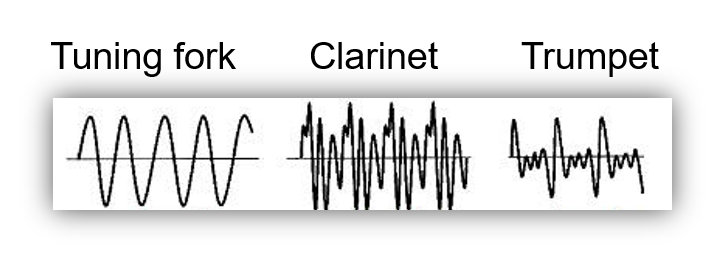
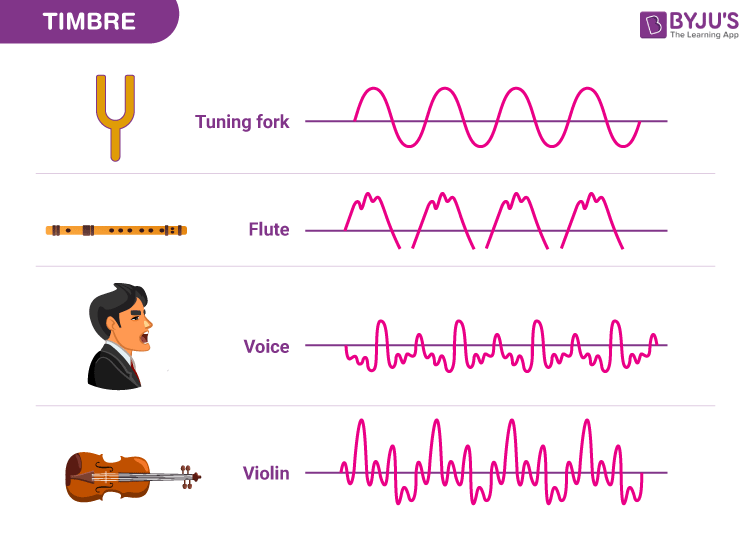
From a scientific perspective, timbre is closely related to the complex structure of a sound wave. Most musical tones contain a fundamental frequency accompanied by additional frequencies called harmonics or partials. Their relative strengths influence the character that listeners perceive. Furthermore, the envelope of a sound—how quickly it begins, changes, sustains, and disappears—also contributes significantly. Two instruments may produce the same fundamental note while emphasizing different harmonics and dynamic patterns. Therefore, their sounds remain distinct even when pitch and loudness appear almost identical to the listener.
Timbre and the Human Voice
The human voice offers perhaps the most personal example of timbre because no two voices sound exactly alike. Differences in vocal anatomy, breathing, resonance, articulation, and habitual speaking patterns create individual sonic signatures. Even identical words spoken at the same pitch can sound completely different when delivered by two people. Singers deliberately develop these qualities, sometimes emphasizing brightness, softness, rasp, breathiness, or resonance. Consequently, vocal timbre becomes central to artistic identity. A recognizable voice can evoke memories almost instantly, making sound a powerful connection between music, personality, and human emotion.
How Musicians Shape Timbre
Musicians rarely treat sound quality as something fixed. Instead, they actively shape it through technique, equipment, performance choices, and interpretation. A guitarist can change timbre by selecting different pickups, pedals, strings, or playing techniques. Similarly, a pianist can influence tone through touch, while a vocalist can modify resonance and breath control. Orchestral musicians also use articulation and dynamics to alter sonic character. Because of these possibilities, timbre becomes an expressive tool rather than merely a technical property. It allows performers to communicate personality and emotion without changing the underlying musical notes.
Timbre Across Different Musical Cultures
The importance of sound character becomes especially interesting when viewed across cultures. Musical traditions around the world have developed instruments, vocal techniques, and performance practices that emphasize different sonic qualities. The bright resonance of one instrument may be valued in one tradition, while another culture may prize a darker, rougher, or more intimate tone. Likewise, the human voice is shaped by language, singing traditions, and social context. Exploring timbre therefore offers more than an introduction to acoustics; it can reveal how communities understand beauty, expression, identity, and musical authenticity.
Timbre in Modern Music Production
Modern recording technology has transformed the ways artists manipulate sound character. Producers can record, layer, filter, distort, compress, equalize, and spatially position sounds with extraordinary precision. As a result, timbre has become central to genres ranging from electronic music and hip-hop to pop, film scoring, and experimental composition. A producer may create an entirely new sonic identity from a familiar instrument by changing its harmonic balance or texture. Meanwhile, digital synthesizers can generate sounds that have no direct acoustic equivalent, expanding the creative possibilities available to contemporary musicians.
Why Timbre Matters Beyond Technical Definitions
Understanding timbre matters because music is rarely experienced as mathematics alone. Listeners respond to the personality of sound, often without consciously analyzing why a particular recording feels intimate, powerful, mysterious, or nostalgic. The timbre of an old recording can even communicate its historical atmosphere, while a distinctive production style can define an entire musical era. In this sense, sound character operates between science and culture. It gives music texture and identity, helping listeners connect technical elements with memories, emotions, places, performers, and personal experiences.
The Lasting Significance of Sound Character
Ultimately, timbre meaning becomes clearest when we stop thinking of sound as merely a collection of notes and begin considering its personality. Pitch tells us where a note sits, rhythm tells us how it moves, and dynamics tell us how strongly it speaks. Timbre, however, helps determine who or what seems to be speaking. It is the quality that lets a familiar voice emerge from a crowd or an instrument become recognizable within an orchestra. That distinctive character is why sound can remain emotionally memorable long after the final note has disappeared.
Conclusion: Listening Beyond the Notes
Timbre meaning ultimately describes one of music’s most subtle yet powerful dimensions: the individual character carried by sound. It connects acoustical science with artistic expression, allowing identical notes to communicate very different impressions. Moreover, it helps explain why certain voices, instruments, recordings, and performances remain unforgettable. Whether encountered in a concert hall, studio, film soundtrack, or everyday conversation, timbre gives sound its personality. Learning to notice it can therefore change the way we listen, encouraging us to hear not only what music says, but also the distinctive character through which it speaks.