BFFR Meaning Begins With a Simple Demand for Honesty
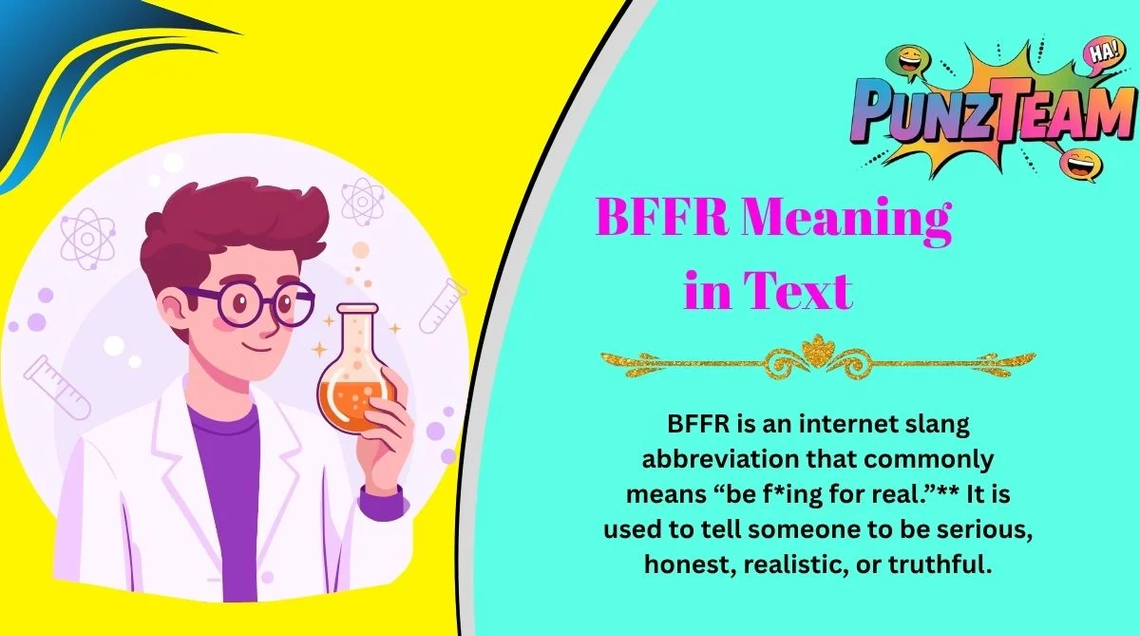
BFFR meaning refers to the internet slang phrase “be f***ing for real,” a blunt expression used when someone wants another person to be realistic, honest, or serious. Although the wording contains profanity, people often use the abbreviation casually rather than aggressively. It can appear in texts, comments, memes, captions, and everyday online conversations. Depending on context, it may express disbelief, amusement, frustration, or playful teasing. Therefore, understanding the surrounding conversation is essential because the same four letters can sound humorous between friends but confrontational in a more serious exchange.
How the Phrase Became Part of Digital Conversation
Internet language changes quickly, and abbreviations often become popular because they communicate an entire attitude in only a few letters. BFFR fits naturally into that environment. Instead of writing a longer response questioning whether someone is being serious, users can type the acronym and immediately convey skepticism or disbelief. Over time, the expression became especially recognizable across social media culture, where short reactions frequently carry emotional meaning. Moreover, its popularity reflects a wider movement toward conversational language online, where people often prefer directness, humor, exaggeration, and shared cultural references over formal wording.
What Does BFFR Mean in Different Situations?
The basic meaning remains consistent, but the emotional tone can change dramatically according to context. Someone might use it after hearing an unbelievable story, seeing an unrealistic expectation, or reading an exaggerated claim. In another situation, friends may use it affectionately when teasing one another. Consequently, the phrase should not automatically be interpreted as an insult. Tone, punctuation, emojis, previous conversation, and the relationship between the people involved can all influence its meaning.
| Situation | Likely tone | What it communicates |
|---|---|---|
| Friend makes an exaggerated claim | Playful | “Seriously, be realistic.” |
| Someone makes an unbelievable statement | Skeptical | “I don’t believe that.” |
| Argument or disagreement | Confrontational | “You need to face reality.” |
| Meme or social-media comment | Humorous | “This is too ridiculous to take seriously.” |
Why BFFR Can Sound Funny or Harsh
Language is rarely understood through dictionary definitions alone. With BFFR, delivery matters particularly because the phrase is built around blunt language. In a humorous post, it can function almost like a punchline, especially when the situation is obviously exaggerated. However, in a personal argument, the same abbreviation can feel dismissive or hostile. For that reason, digital communication requires readers to consider more than the literal words. Emojis, capitalization, punctuation, and the existing relationship between participants can soften or intensify what appears on the screen.
BFFR Meaning and the Culture of Internet Slang
The rise of expressions like this demonstrates how online communities continuously reshape communication. Traditional writing often values complete sentences and carefully chosen vocabulary. Social platforms, meanwhile, reward speed and recognizable expressions. As a result, acronyms can become cultural shortcuts that allow users to communicate complicated reactions instantly. BFFR does more than shorten a sentence; it communicates an attitude of disbelief and demands realism. Similarly, other internet expressions have developed meanings that depend heavily on cultural familiarity. Understanding them has therefore become part of modern digital literacy.
From Serious Reaction to Playful Meme Language
One reason the expression travels so easily online is its flexibility. A person can use it as a genuine challenge to an unrealistic statement or as an exaggerated reaction to something completely harmless. For example, someone posting an enormous dessert and claiming they will “only have one bite” might receive the phrase as a humorous response. Likewise, a friend announcing an obviously impossible plan may receive the same reaction. Thus, the expression often occupies an interesting space between sincerity and performance, which is central to contemporary social-media humor.
When Should You Use the Expression?
Using internet slang successfully depends largely on knowing your audience. Among close friends or in informal online spaces, the abbreviation may feel natural and entertaining. In professional emails, academic writing, customer communication, or formal discussions, however, it is generally inappropriate because of its profanity and highly informal tone. Instead, expressions such as “be realistic,” “seriously?” or “are you being serious?” can communicate a similar idea without the same level of informality. Ultimately, digital fluency includes knowing not only what an expression means but also when it belongs in a conversation.
Why Context Matters More Than the Acronym
Acronyms can create misunderstandings because written communication removes many cues found in face-to-face conversations. A raised eyebrow, laugh, or friendly voice might make a blunt statement obviously playful in person. Online, those signals may disappear. Therefore, BFFR can be interpreted differently by different readers. Someone familiar with internet slang may recognize it immediately as playful, while another reader may regard it as unnecessarily rude. This difference illustrates an important feature of modern communication: meaning is created not only by vocabulary but also by community, context, relationship, and tone.
The Broader Appeal of Short-Form Digital Language
The popularity of abbreviated expressions reflects a broader transformation in how people communicate. Social media encourages quick exchanges, and users frequently develop vocabulary that feels native to particular platforms or communities. These terms can create belonging because recognizing an expression signals familiarity with a shared culture. At the same time, slang changes rapidly. A phrase that feels current today may eventually become less common as new expressions emerge. Consequently, understanding internet language requires cultural awareness as much as traditional vocabulary knowledge.
BFFR Meaning in Everyday Online Communication
At its heart, BFFR meaning is about asking someone to drop exaggeration and acknowledge reality. That request can be serious, sarcastic, affectionate, or humorous depending on the circumstances. The expression has become useful precisely because it carries more emotional weight than a neutral sentence such as “please be realistic.” Nevertheless, its profanity makes it unsuitable for every audience. Readers encountering the acronym should therefore look beyond the letters themselves and examine the surrounding conversation. In digital communication, a few characters can carry an entire mood, relationship, and cultural reference.
Frequently Asked Questions About BFFR
What does BFFR stand for?
BFFR stands for “be f***ing for real.” It is an informal internet expression used to question whether someone is being realistic, serious, or honest. The abbreviation is common in casual digital communication.
Is BFFR rude?
It can be. Because the original phrase contains profanity, it may sound blunt or confrontational, particularly when used with strangers or during an argument. However, friends may also use it jokingly.
Can BFFR be used positively?
Yes. In friendly conversations, it can be playful rather than hostile. For instance, someone might use it humorously when a friend makes an obviously exaggerated statement. The intended meaning depends heavily on context.
Where is BFFR commonly used?
The abbreviation appears primarily in informal digital communication, including social-media comments, text messages, memes, captions, and online discussions. Its usage is closely connected with contemporary internet culture.
What can I say instead of BFFR?
If you want a less blunt alternative, you could say “be realistic,” “seriously?”, “are you for real?” or “come on, really?” These alternatives communicate skepticism while avoiding profanity.
Conclusion: More Than Four Letters
BFFR meaning reveals how modern internet language can compress emotion, humor, skepticism, and cultural context into a remarkably small expression. Its popularity comes from its ability to communicate a strong reaction quickly, while its interpretation depends on the relationship and situation surrounding it. Ultimately, understanding such slang is less about memorizing abbreviations and more about recognizing how people use language socially. As online communication continues to evolve, expressions like this will keep showing how digital culture creates new ways to express familiar human reactions.