Introduction
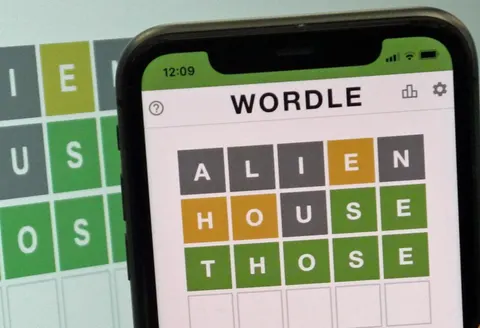
wordle hint forbes has become an intriguing search phrase because it sits at the intersection of a daily word puzzle, digital journalism, and the modern habit of seeking just enough help to keep a challenge enjoyable. Wordle is deceptively simple: players have six attempts to identify a five-letter word. Yet the popularity surrounding daily hints shows that the experience is about more than solving vocabulary. Instead, it has become a small morning ritual, a test of patience, language, deduction, and increasingly, the desire to share the moment with others.
Why Wordle Became More Than a Game
Wordle’s appeal comes partly from its restraint. Unlike many contemporary digital games, it does not demand endless play, complicated accounts, or hours of commitment. There is one puzzle, one solution, and a limited number of guesses. Consequently, completing the challenge can feel satisfying without becoming overwhelming.
Moreover, the game’s social design helped transform private problem-solving into a shared cultural experience. Players can compare results without revealing the answer, while conversations about difficult words naturally develop around the daily puzzle. As a result, searches such as wordle hint forbes reflect a broader desire for guidance that preserves the pleasure of discovery.
The Rise of the Daily Hint Culture
The popularity of Wordle hints reveals an interesting change in how people approach puzzles. Traditionally, asking for an answer could be viewed as giving up. Today, however, many players distinguish between receiving the solution and receiving a strategic nudge.
A useful hint might identify a vowel, suggest a word pattern, or provide a definition without revealing the final word. Therefore, readers searching for wordle hint forbes may not necessarily want someone to solve the puzzle for them. They may simply want to escape an impasse and continue playing independently.
Forbes and the Search for Puzzle Guidance
Forbes is primarily associated with business, finance, entrepreneurship, and influential people. Its connection with Wordle-related searches illustrates how widely digital puzzle culture has spread across online publishing.
When established publications cover everyday puzzles, they can frame them as part of broader digital culture rather than merely entertainment. This matters because Wordle has become an example of how a simple product can create recurring engagement. Readers return every day, search for clues, discuss strategies, and develop routines around a five-letter word.
The wordle hint forbes search therefore represents more than a request for a clue. It also demonstrates how audiences increasingly use major publications as destinations for quick, structured assistance with familiar digital experiences.
The Psychology Behind Asking for a Hint
There is a subtle psychological distinction between wanting an answer and wanting a hint. A complete answer ends the problem. A carefully designed clue, by contrast, keeps the player’s mind involved.
That distinction helps explain why hint-based content works so well. Players can preserve the feeling of achievement while reducing frustration. Furthermore, a difficult puzzle can become more enjoyable when a small piece of information suddenly makes the pattern visible.
In this sense, Wordle resembles traditional crossword culture. Players may consult dictionaries, discuss clues with friends, or look for strategic suggestions. The assistance does not necessarily undermine the activity; instead, it can help sustain participation.
Wordle, Language and Everyday Intelligence
Wordle also highlights something easily overlooked: vocabulary is both knowledge and experience. Players may know thousands of words but still encounter an unfamiliar five-letter combination. Conversely, someone with a smaller vocabulary may solve a puzzle through strong pattern recognition.
The game consequently rewards several forms of thinking at once. Players consider letter frequency, positional information, possible word families, and previous failed guesses. Additionally, they must manage uncertainty because every guess provides information but also consumes one of six opportunities.
That balance makes the daily puzzle unusually compact. Within a few minutes, players engage memory, deduction, vocabulary, probability, and decision-making.
Why Searchers Prefer Hints Over Spoilers
The popularity of hint-based searches also reflects a broader internet culture in which users increasingly want adjustable levels of assistance. Someone stuck after two guesses may need only a general clue. Another player facing the final attempt may want something much more specific.
Therefore, good Wordle guidance should ideally reveal information gradually. A sensible progression might look like this:
| Assistance level | What the player receives | Experience preserved |
|---|---|---|
| Gentle clue | General definition or theme | Maximum discovery |
| Pattern hint | Letter placement or structure | Strong deduction |
| Strong clue | Several useful letters | Moderate challenge |
| Answer | Complete solution | Puzzle effectively finished |
This graduated approach explains why searches around wordle hint forbes remain useful even for experienced players. The goal is not always to eliminate difficulty; often, it is to control it.
The Morning Ritual of a Five-Letter Word
For many players, Wordle occupies a surprisingly personal place in the day. It may appear during breakfast, on a commute, between meetings, or during a quiet evening. Because the puzzle changes once a day, it creates a predictable rhythm.
Unlike an endless game, Wordle has an endpoint built into its design. Once the puzzle is solved—or the attempts are exhausted—the player simply waits. That limitation creates anticipation for the next day.
Furthermore, the daily format gives the game a communal dimension. Millions of people can be working on the same word within the same twenty-four-hour period, even if they never communicate directly.
When a Hint Becomes Part of the Experience
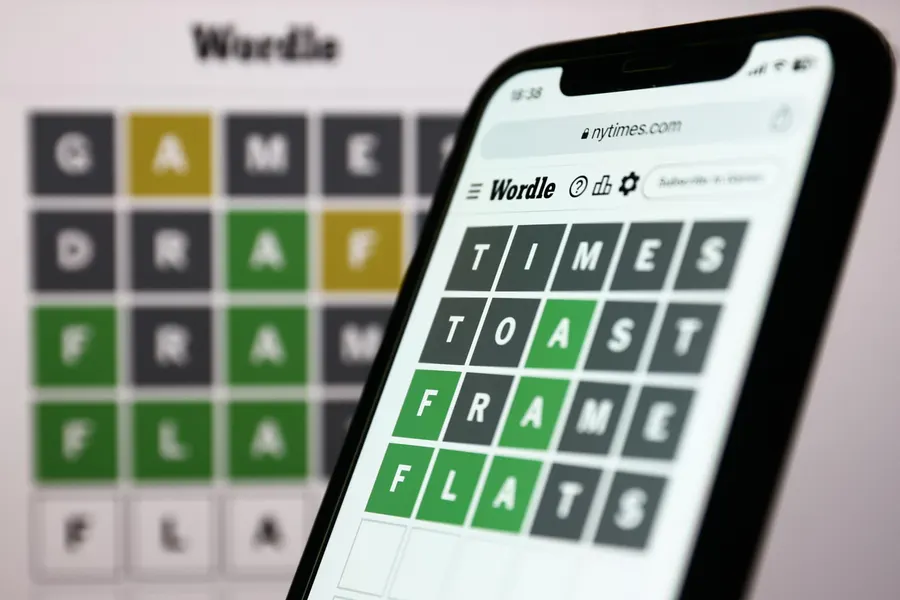
A hint does not necessarily represent failure. In many cases, it becomes part of the ritual itself. Players might first attempt the puzzle alone, then search for a clue only when progress stops.
This creates a flexible relationship with difficulty. Some days are solved immediately; others require careful reasoning. Occasionally, an unfamiliar word makes outside assistance attractive. Consequently, the search for wordle hint forbes can be understood as part of the wider ecosystem surrounding daily puzzle solving.
The important point is that the player still participates. A hint can provide direction while leaving the final act of recognition to the person holding the puzzle.
The Broader Cultural Meaning of Wordle
Wordle arrived during a period when digital audiences were becoming increasingly tired of infinite feeds and constant notifications. Its simplicity offered a different proposition: one small challenge, followed by a natural stopping point.
That design has cultural significance. In an online environment built around endless consumption, Wordle encourages completion rather than continuation. Players solve the puzzle and move on.
At the same time, its popularity demonstrates that people remain attracted to traditional forms of intellectual play. The interface may be modern, but the underlying pleasure is ancient: discovering a pattern, overcoming uncertainty, and experiencing the satisfaction of being right.
What Searches Like “Wordle Hint Forbes” Reveal About Readers
Search behavior often tells a story about what audiences value. A query such as wordle hint forbes combines a recognizable game with a trusted publishing destination. It suggests that users are not simply searching randomly; they are looking for a particular kind of assistance from a familiar source.
Moreover, these searches reflect the changing role of online journalism. Publications increasingly serve readers at the intersection of news, entertainment, lifestyle, technology, and everyday digital habits. A puzzle may seem small compared with major economic or political stories, yet it can generate meaningful recurring engagement.
That engagement is valuable precisely because it is habitual. A person who visits for a daily puzzle may gradually encounter other areas of a publication as well.
A Small Puzzle With a Surprisingly Large Footprint
Wordle’s enduring significance is not based on complicated graphics or technological innovation. Instead, its strength lies in a simple idea executed with remarkable discipline.
Five letters. Six attempts. One daily answer.
From that modest framework emerged a worldwide conversation about vocabulary, strategy, luck, and online ritual. The popularity of searches for hints shows that the surrounding ecosystem has become almost as interesting as the puzzle itself.